



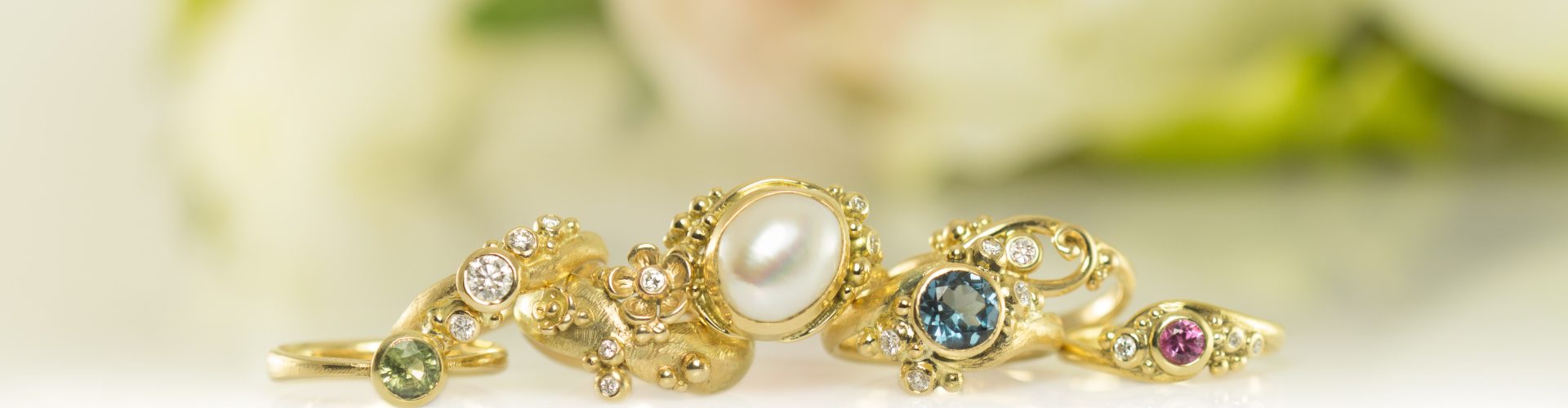
However, in order to create a ring for you, it is important that we have your ring size. But what if you've fallen in love with a Castens ring on our website, but you're not in the Copenhagen area - or if you've fallen in love with a woman who deserves a Castens ring, but you don't know it yet? Well, luckily we have some tricks up our sleeves.
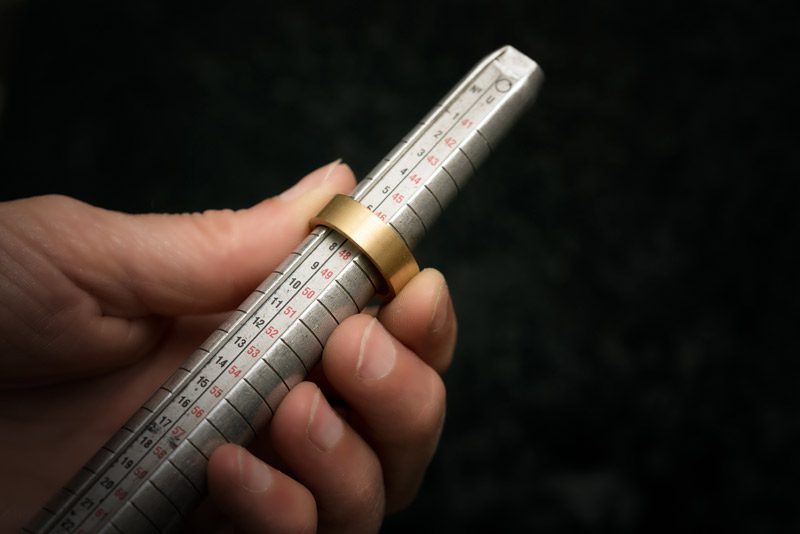
In Denmark, we measure ring size as the circumference of the finger in millimetres (i.e. the inner circumference of the ring). I can also calculate it if we have a diameter to work with, and these measurements are something you can easily find out on your own - even literally. Abroad, it's a completely different story: Some countries, like us, use metric measurements, others measure in inches, diameter (both metric and inches) and in the UK they use a letter system. So the confusion is total! If you have an international ring measure and want to know what it is in a Danish size, you can download this international ring size conversion chart. You have up to several options to find out the right ring size:
-
The easiest thing to do, of course, is to go to your local jeweller and ask to have your ring size measured. Be aware of whether you want to order a small and delicate ring or a wide (over 5 mm) ring. As a rule of thumb, the wide ring should be one size larger than the thin one
-
String method: Take a piece of string about 20 cm long. Ordinary ribbon can also be used, but sewing thread is too thin. Wrap the string twice around the finger you want to wear the ring on - it's important to be precise so that the ribbon is neither too tight nor too loose. Mark with a marker in a transverse line across both strings. Unwrap the string from your finger again and measure the distance between the two marks. For example, the measurement could be 54 mm, which means you are wearing size 54 according to Danish ring sizes.
-
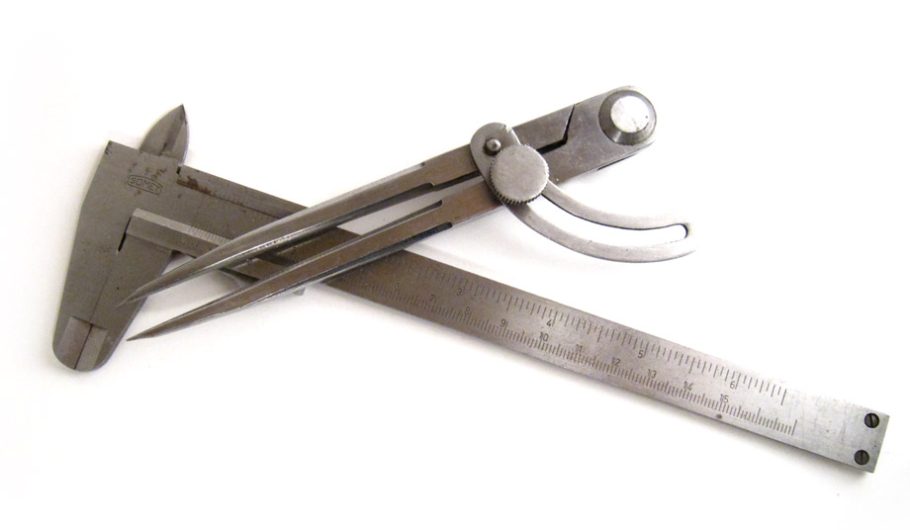
If it's not for you, find a ring that fits your finger well and measure the inner diameter with a callipers. If the ring has become slightly oval, perhaps because it's made of a soft/flimsy material and has been worn a lot, measure both the widest and narrowest part. I need the average.
-
If you don't have a callipers, place the ring on a piece of paper and draw around inside it. Now measure the diameter.
-
See if you can get away with trying on one of her rings that fits the right finger (an engagement ring is usually placed on the left ring finger). Now you know where the right ring size fits. If you want to make sure you remember that spot, you can mark it on your finger. Then you can go to the jeweller and get the size measured while you're still sure you remember what the right size felt like on your finger.
In the ordering process, it's not always easy to get the size right: a ring is rigid - it's stiff and doesn't easily change shape and size unlike a human finger. Such a finger can change size due to heat (easily a whole size on a hot summer day), how much salt you've eaten lately (which will retain water in your body and make a finger thicker), ”that time of the month” and not least pregnancy, which drastically changes the body in general. It's also not unusual for your ring size to change over the course of your life. Many people gain weight, some get bigger knuckles from arthritis and others lose weight. In this case, it's quite important that a ring can be resized - once you think you've found a stable one.
But don't panic! Once you're wearing a ring all the time, your finger will eventually adapt to it. In fact, you can put on quite a bit of weight before it starts to become a real problem. But don't wait too long to get your ring resized. If you get to the point where you have to put your finger under a cold tap for half an hour and use a lot of cream to pry it off, keep it off!
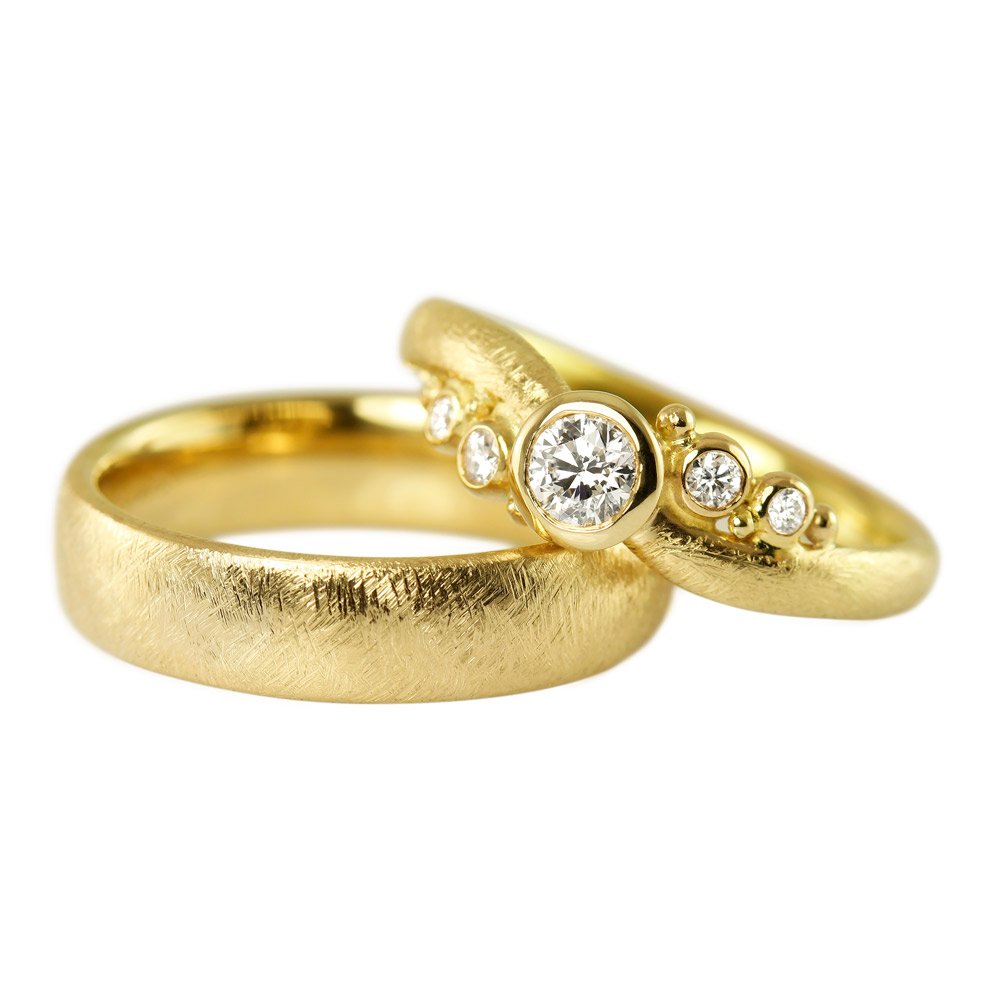 At Castens, we have many years of experience in assessing ring sizes and do our best to take these challenges into account when determining the right size. Another thing to consider is the shape of the ring you want. The wider the ring, the more tissue (fat and muscle) it will displace, making it feel smaller. The shape of the ring also matters: if it's rounded on the inside (this is how we create most of our rings because it's the most comfortable to wear), it will feel bigger than a ring that is flat on the inside. Taking all these factors into account, it makes sense to get your ring sized by a professional jeweller because the chances of ending up with the correct size are so much higher.
What if the size is wrong anyway?
Our policy is simple: within the first six months, we will resize your ring free of charge. We provide this service to everyone who has a gold ring created in our workshop.
Of course, we can also adjust the size of your old rings. But it's not always easy due to the material and/or design of the ring. For example, you CAN resize a silver ring with a slightly heat-sensitive amethyst, but there will be some risk in the operation because it takes a lot of heat to solder silver. Alternatively, you can remove the stone, adjust the size, repair the setting (which almost always suffers a little from removing a stone) and then re-set the stone. However, in most cases, this solution will only be chosen if the ring has a high sentimental value because the labour costs will often exceed the actual value of the ring.
A size adjustment costs a basic amount and if it is a gold, palladium or platinum ring, a certain amount has to be added for each size that is added.
Of course, if you still have questions about your ring size, feel free to write and ask and we'll guide you from there.
Blog categories