Tel +45 32 20 04 44
design@castens.com
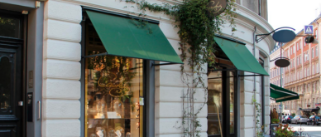
Holbergsgade 19a
1057 Copenhagen K, Denmark
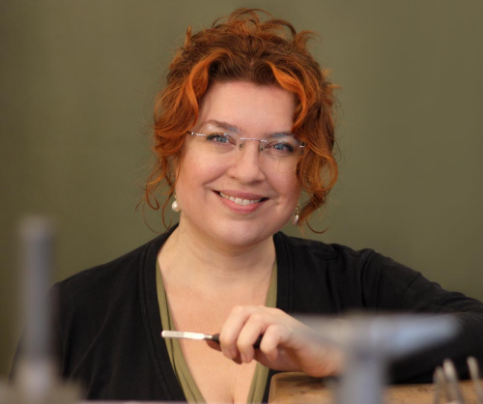
During the artistic design process, we work closely with you and strive to merge your vision with refined craftsmanship to create a new piece of jewellery with a unique character.
We take on a wide range of handmade jewellery projects, so whether you need rings for parties or everyday, engagement rings, bridal sets, wedding rings, necklaces, bracelets, earrings or other adventurous jewellery, we are ready to wield the tools and create jewellery for the most important moments in your life.

The remarkable thing about diamonds is that they are made for eternity: Long after we are gone, the diamond will still exist, which is why we never own a diamond - we just look after it for the next generation. If you want to buy such a diamond, you need to consider the 4 C's, which describe the diamond's quality. These make it much easier to choose the right diamond for your needs
Size matters when it comes to diamonds. A lot of very small diamonds are found in nature, which is why small diamonds are economically within reach for most people.
Large diamonds are somewhat more rare. When a diamond reaches 1 carat or more, it becomes significantly harder to find in good jewellery quality - and therefore exponentially more expensive.
Really big diamonds are extremely rare. That's why it always makes headlines when new giant diamonds are found. One example is the 1,109 carat Lesedi La Rona diamond found in Botswana in 2015.
What do we use in jewellery? In our jewellery, the centre stone is typically set between:
•0.1 – 0.5 carat
•approx. 3–5 mm in diameter
It might not sound like much, but on a finger it gives a lot of life and play – without taking over completely.
Good to know;
• 1 carat = 0.2 grams
• “Carat” (C) is used for diamonds
• “Carat” (K) is used for gold
• 0.01 carats is often called “one point”. A 0.23-carat diamond is therefore referred to as 23 points.


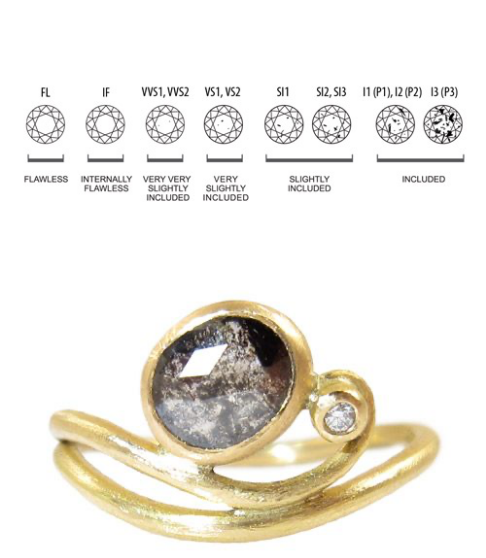
How clear is the diamond? Clarity is about how many small natural traces, called inclusions, are found inside the diamond.
Most diamonds have inclusions, as they are formed deep within the earth under immense pressure. A diamond completely without inclusions is therefore very rare and typically also very expensive.
Clarity Scale To compare diamonds, a clarity scale is used, which describes how visible the inclusions are:
• P (piqué) / I (included): The inclusions are distinct and can often be seen with the naked eye
• Flawless (lup-ren): No inclusions, even under magnification
Most diamonds lie somewhere in between.
A good example is SI (Slightly Included): Here there are small inclusions, but they can normally only be seen through a magnifying glass. To the naked eye, the diamond therefore appears clear.
In our jewellery, we typically work with:
• SI diamonds in silver jewellery
• .925 or .750 in gold jewellery (unless our customers want something else)
In recent years, opaque diamonds have become increasingly popular. Opaque diamonds are diamonds with so many inclusions that they appear opaque. They often have subtle earthy tones and a lovely play of light on the surface. Each stone is unique, and that is precisely part of their charm.
When we think of diamonds, we think of ”white diamonds”. This is naturally nonsense, because they are not white, but colourless, so what we are actually talking about is *how* colourless they are. A lot of fine jewellery-quality diamonds have a more or less yellowish tinge, and it is this that is referred to in the colour grading system. In Denmark and a number of other countries, fine, white jewellery diamonds are often called something like ”Wesselton” – abbreviated to W. In addition, we supplement this with an alphabetical classification, which is also used internationally:

Many diamonds can also be found in shades from champagne to brown, and these colours can be uncommonly charming, while also often being a little gentler on the budget.
AND you can also get diamonds in every colour of the rainbow. More on this further down.

Just to clarify a common misunderstanding: a brilliant is a completely normal diamond; it has what we call a ”brilliant cut” – that is, the classic, round faceted cut that we associate with diamonds. This cut is the modern way of cutting, with a total of 57 facets (even on tiny 0.005 ct diamonds, which only measure 1 mm). Most other gemstones, such as sapphires, are also cut in a brilliant cut, but we don't call them brilliants; they are simply "faceted".
The cut is the only factor that we humans can influence. Because if the diamond is proportioned correctly and the facets are correctly positioned in relation to each other, the stone will reflect almost all light back again. So it's the cut that brings out the famous rainbow sparkle, also known as ”fire”, in diamonds.
If this grinding is done perfectly, you get what is known as hearts & arrows. This can be seen if you place the loose stone in a special tube and look through it. We have one in the store and if you have a loose diamond, you are welcome to come in and check if it is a “Hearts & Arrows”.
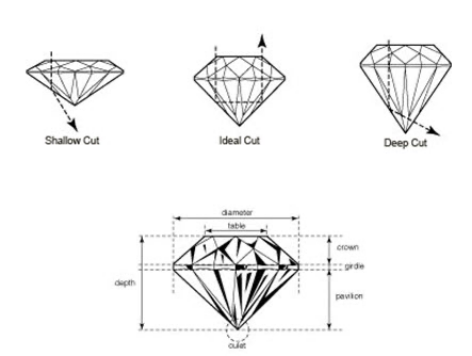
The cut is crucial to a diamond’s appearance. Even a W/SI can outshine a River/FL if the cut is absolutely perfect. In that case, an otherwise “mid-range” diamond becomes utterly captivating.
We work primarily with PURE Diamonds, which specialises in diamonds with a particularly high-quality cut.
PURE Diamonds is also a member of the Antwerp Diamond Bourse, one of the world's oldest and most prestigious diamond exchanges. This accreditation guarantees seriousness, professionalism, in-depth industry knowledge, and adherence to the highest ethical standards.
Besides the classic round shape, diamonds are found in many different cuts and facettings, e.g. the charming, old-fashioned rose cut.
If you’d like to see examples of the different cuts, you can visit the GIA (Gemmological Institute of America) website.

A difficult question! It mainly depends on the size, but, as described above,
there are also other criteria that come into play. For example, a very small diamond of 0.01 ct (approx.
1.3 mm) - what many in the industry somewhat arrogantly call ”grit” - you can have put in
your jewellery for less than 500 kr (including the setting work itself).
But the price curve is steep!
The following examples are from May 2024 and prices can change a lot over time.
A 0.1 carat diamond measuring approximately 3 mm is a fine stone for a wedding ring. It's easy to spot, but still affordable. At the so-called ”low” end of the quality scale, a W/SI costs around DKK 2,500. If you want the best TW/VVS quality, it costs around DKK 2,800. In comparison, the same stone in a beautiful, muted champagne will cost around DKK 1,300.

A 0.34 carat diamond measuring approximately 4.5 mm in W/SI quality costs around DKK 10,600. In the best TW/VVS quality, it costs around 11,500 kr. In comparison, an elegant champagne-coloured version will cost around DKK 4,800.

What about the really big diamonds? One carat and upwards?
Top quality (TW/VVS) is around 99,500 kr.
A colourless diamond (W/SI2 - i.e. with some impurities visible to the naked eye) costs just under DKK 63,500.
If you want it to be champagne-coloured, it's around 24,000 DKK.
A black diamond for the dramatic is available for under DKK 10,000.
When we say "Top Quality" we are talking about the best quality in a normal jewellery store. But it's not TOP quality because (as you've read above) there are even finer diamonds, namely the colour "River" and the quality "Flawless". These stones are so rare that it's hard to put a price on them, because the price depends entirely on how many of these types of diamonds are currently on the market.

Want a coloured stone? Then consider a diamond. Diamonds come in all colours of the rainbow, but they sparkle much more than any other coloured stone ever could.
Many of these colours are created by mimicking the processes that can also colour diamonds in nature, such as heat, pressure or irradiation. The result is still real diamonds, but with a colour that has been created afterwards.
These coloured diamonds are much more affordable than the naturally coloured, more powerful ones, which is why we use them in our jewellery. Personally, we love the green coloured diamonds that can really bring summer joy on even the darkest winter day!
However, if you ever take a piece of jewellery with a coloured diamond in for repair, it's important to tell the jeweller that the stone has been colour treated. This is because the high heat used in soldering can in some cases change or remove the colour. This can often be taken into account during the work - but only if the jeweller knows this in advance.

Blue diamonds are among the rarest of all. A natural blue diamond of just half a carat can cost around a million dollars.
Another famous example is the Argyle pink diamonds, which originate from the Argyle mine in Australia. They come in a range of beautiful shades of pink that vary in rarity and value. Since the mine closed and a replacement has yet to be found, they have become even more sought after.
A small natural Argyle diamond of just 0.1 carat starts at around $29,000 for the least intense colours - and the price can quickly double or triple as the colour becomes more deep and saturated. Therefore, the price of Argyle diamonds also increases much faster with size than white diamonds.
Read more about why the precious Argyle diamonds are so popular Here.

Diamonds come in many price ranges, and therefore it's a good idea to start with a budget.
•We start by assessing the cost of the jewellery itself (materials and labour)
•Hereafter, we will see how much stone fits within your budget
We can always adjust the size and quality so that we hit your dream piece of jewellery
If you want a special stone in a particular shape, colour or size, we will find different options among our suppliers so you can choose what best suits your wishes and your budget.
Please note! The prices above are indicative and fluctuate with daily rates.
If you want to get a price estimate on your dream diamond, you are welcome to contact us at design@castens.com


Didn't find what you were looking for?
Get your own custom made jewellery
Have a piece of jewellery created just the way you want it. At Castens, we create handmade jewellery in our workshop for those who appreciate unique designs that have a special meaning to you.