



Of course, the challenge is not new: as long as mankind has been able to cheat with materials, the same mankind has tried to prove its honesty. This is one of the reasons why guilds began to emerge in the Middle Ages. At the time, these guilds had a large and important task on several fronts: keeping their members in check, guaranteeing the authenticity of their materials and acting as a trade union for the various professions.
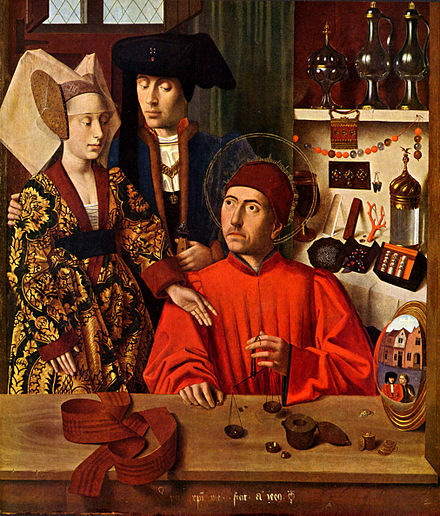
The Copenhagen Goldsmiths' Guild is one of the oldest in the world - it was founded in 1429 and sanctioned by King Erik VII of Pomerania and his queen Philippa. The patron saint of the guild is Saint Loyes, who was born in France around 590. He was a skilful metalsmith, advisor to the king, ransomed many slaves and built several churches and monasteries (he must have been quite wealthy). He was also a priest and later became a bishop.
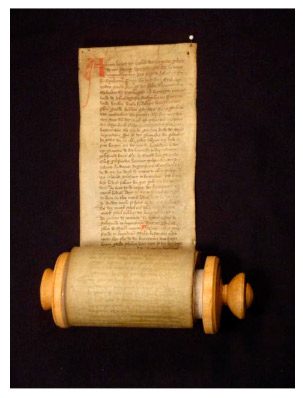
It is the very first written document to enshrine the goldsmith's guild - called a ”slash” - is a 132 cm long scroll that sets out the rules and duties of members. The document describes, among other things, the expected manners, which you are fined for breaking: No pulling knives, ”spilling” beer on each other, using slurs like ”bastard” or starting fights. Disagreements had to be resolved in the guild before they could be brought before the magistrate. Sounds like it was a lively time back then... Read more about the historic jewellery guild here.
Today it's a bit more civilised: when I joined in the spring of 2016, it was during the AGM and a lovely dinner. The new members all drank from silver goblets (yes, they were massive) and were formally introduced to the current members before being presented with their membership certificates. Today, Kjøbenhavns Guldsmedelaug works to promote the industry, for example by supporting events such as the “Guild Show” (which I attended this year - see a blog article about the Guild Show here).
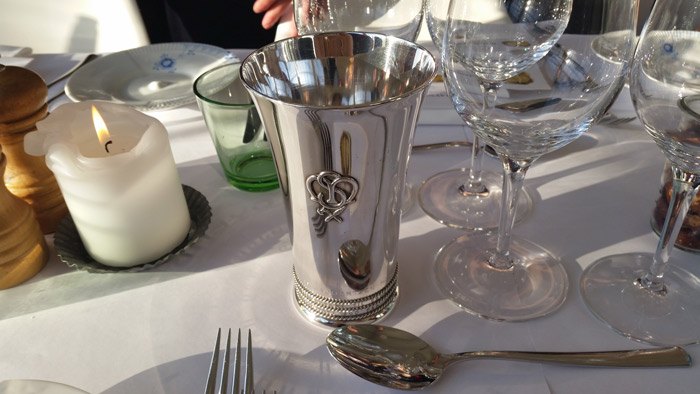
But the guild is no longer in charge of checking the honesty of its members in terms of the metals' purity. That task is now handled by FORCE Institute, who come by once a year for an unannounced visit to take samples of the gold. If these samples turn out to be of a lower alloy than what you claim it is, you'll be fined or, in severe cases, even sentenced to prison.
In other words: You can trust the gold sold by Danish jewellers. We have worked hard to prove our honesty since 1429!
Blog categories